Remembering Pope Francis in the context of Nostra Aetate

Speech delivered at DARING PEACE - International meeting for Peace, organised by SANT'EGIDIO. Rome, October 26th - 28th, 2025.
On these days, the sixtieth anniversary of the promulgation of the conciliar document Nostra Aetate by Pope Paul VI, which had initially been commissioned by Pope John XXIII, is celebrated. Its Chapter IV marked a turning point in the 2,000 years of Jewish-Christian relations, on the one hand, and was the Catholic response to the Shoah, on the other. As Cardinal Bea expressed in the introduction to his book The Church and the Jewish People[1]:
The relation of the Church with the Jewish people is a two thousand year old problem, as old as Christianity itself. It became much more acute, particularly in view of the ruthless policy of extermination inflicted upon millions of Jews by the Nazi regime in Germany. And so it has attracted the attention of the Second Vatican Council
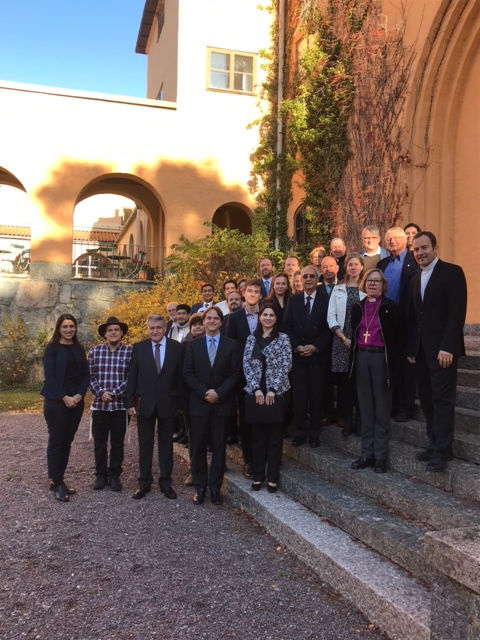
Daring Peace, International Meeting for Peace Organised by Sant'egidio With Pope Leo XIV With Pope Leo XIV With Cardinal Matteo Maria Zuppi With Rabbi Noam Marans With Cardinal Pierbattista Pizzaballa With Oded Wiener With Rabbi Ephraim Mirvis
During the papacy of John Paul II (1978-2005), the relationship between the Catholic Church and the Jewish community was significantly strengthened by a series of papal actions that implemented Nostra Aetate IV. First, was the publication in 1985 of “Notes on the Correct Way to Present Jews and Judaism in Preaching and Catechesis in the Roman Catholic Church” by the Commission for the Religious Relations with the Jews. Then John Paul made a historic visit to the Great Synagogue of Rome in April 1986. Subsequently, on December 30, 1993, the Fundamental Agreement between the Holy See and Israel was signed, establishing diplomatic relations on March 10, 1994. In March 1998, Cardinal Edward Idris Cassidy, president of the Commission for Religious Relations with the Jews, presented the document titled "We Remember: A Reflection on the Shoah," for which John Paul sent a significant letter to Cassidy to be used as a preface. On March 21, 2000, he began his historic visit to the State of Israel.
These developments had echoes in my own country of Argentina. After July 10, 1990, Antonio Quarracino was appointed Archbishop of Buenos Aires by John Paul II. From 1992, Jorge Bergoglio served as his auxiliary bishop, and in 1997 he was appointed as Quarracino's coadjutor bishop. After Quarracino's death on February 28, 1998, Bergoglio succeeded him as archbishop.
Surely inspired by Pope John Paul II attitude towards the Jews, Antonio Quarracino made gestures of great rapprochement with the Jewish community, as attested by Baruch Tenenbaum[2], who was very close to him. Therefore, Jewish-Catholic dialogue was also on Bergoglio´s agenda when he took office as Archbishop of Buenos Aires.
Our first encounters took place at the Buenos Aires Cathedral during the celebrations of Argentina's two national holidays: May 25 and July 9. Starting on July 9, 1990, I was invited by successive presidents of Argentina to be part of the delegation representing the Jewish community at these celebrations, which included a solemn Te Deum. As Coadjutor Bishop and later as Archbishop, we often exchanged greetings. Among these, he would share football jokes, since we were fans of rival teams. Beneath the surface humor, there was a clear message: let’s work together to build a path of dialogue. My commitment to interreligious dialogue was well known, especially after I published an article in the newspaper La Nación on April 12, 1995, titled "Between Pesach and Easter." In this article, I concluded by asking whether the recent dialogue between the Vatican and Israel will help reverse the historical paradox of the hate between Jews and Christians. La Nación was the newspaper Bergoglio read every day. During those years, I served as Rector of the Latin American Rabbinical Seminary and rabbi of the Benei Tikva congregation.
Our dialogues deepened over time, leading to actions that would mark milestones in Jewish-Catholic relations in Argentina.
One of the most significant activities at the beginning of our relationship was his two visits to my community for the recitation of the Selichot (prayers of repentance) in preparation for the upcoming new year (Rosh Hashanah) and the Day of Atonement (Yom Kippur). On both occasions, September 11, 2004 and September 8, 2007, he delivered profound messages that are masterpieces on the concept of Teshuvah, contrition, for the Jewish-Catholic dialogue.
In return, he invited me to deliver a lesson to the seminarians at the Metropolitan Seminary of Buenos Aires. Afterward, in his characteristic style, he said to me, "You can't imagine what your presence with the seminarians meant to them."
At the end of 2009, I met with him and proposed that we create a book about "God," featuring contributions from both of us and other thinkers in Argentina. His initial response was negative. However, a month later, he called me and suggested that we write a book addressing topics relevant to everyday people, such as religions, religious leaders, disciples, prayer, guilt, Shoah, fundamentalism, and death. We titled it On Heaven and Earth.
Rather than being merely a philosophical or theological discussion book, Bergoglio emphasizes that his faith should manifest in his daily interactions with others. As he expresses in the prologue to the book, "The challenge was to walk with respect and affection, to walk in the presence of God and strive to be blameless. This book bears witness to that path..."
Bergoglio aimed to create a message that would resonate in the memories and hearts of many, rather than crafting intricate theological or philosophical treatises that would only be understood by a select few. Through his devoted friends, he was able to convey messages to a broad audience and to future generations. As Grand Chancellor of the Pontifical Catholic University of Argentina, Santa María de los Buenos Aires, he played a key role in my receiving an honorary doctorate for my contributions to the culture of the city. While I was the one being honored, I recognized that this event was much bigger than me. At the end of the ceremony, Professor Norberto Padilla, a prominent figure in ecumenical and interreligious dialogue and former Secretary of Religion affairs of the Nation, approached me and remarked, "Ten years ago, this event could not have taken place." His words carried a profound message: a decade ago, there were still traces of anti-Jewish sentiment at the University that would have precluded such an honor. I then spoke to the rector of the University, Victor Manuel ("Tucho") Fernández, about Padilla's comment. After a moment of reflection, he concurred with Padilla's assessment.
After he was elected Pope, our relationship remained the same as it was in Buenos Aires. Through emails and phone calls, we continued to stay close. He invited me to join the official Vatican delegation for his pilgrimage to the Holy Land.
The embrace that united us in front of the Western Wall in Jerusalem with Muslim leader Omar Abboud shared a profound meaning. This image aims to go beyond the individuals involved. It wasn't merely a political gesture between leaders of different faiths; it was a genuine connection. The three of us knew each other well and had shared life experiences together, making it clear that our meeting in such a significant place wasn’t just a formal occasion. Neither Abboud nor I held any official power; we stood together simply as a Muslim and a Jew. This embrace was not intended for leaders of different faiths to consider but was meant for ordinary people to relate to—a moment where the Pope momentarily set aside protocol to embrace friends of different faiths in a space that holds great significance for Jews, Christians, and Muslims alike.
Months earlier, I had suggested we embrace at the Western Wall to create an image for posterity—one that would symbolize the overcoming of the significant differences that had historically separated Jews, Christians, and Muslims, resulting in so much harm. Some Israeli officials had told me that embracing him in front of the Wall would be impossible due to protocol. However, Pope Francis set protocol aside. At that moment, he became Father Jorge once again.
After the embrace, I asked him to wait just a few seconds while I posted a message on the Wall next to his. He agreed. As I placed my message, I recalled the deep affection I had for him, which only grew when I saw the leader of hundreds of millions of faithful waiting for his friend, who sought out the gap in the Wall to leave his message alongside that of the Pope. I then placed my hand on his shoulder as we walked toward the area where the guest book awaited him, ready for him to write his message.
During the dark months of the war that began on October 7, we communicated regularly via email and had a lengthy conversation on Thursday, June 13, 2024. That was the last time we were together. Although we had disagreements, we always tried to address the deep pain experienced by both Israelis and Palestinians through open dialogue.
On April 21, Father Jorge returned his soul to his Creator.
In the English edition of his last book: Hope. The Autobiography (Random House, New York, 2025), on page 210, he writes:
From my earliest childhood, and then just as naturally when I was a priest, archbishop, and cardinal, I formed real friendships with ordinary people, leading figures in the Jewish community, and rabbis in Buenos Aires. With people such as Abraham Skorka, rector of the rabbinical seminary and rabbi of the Benei Tikva community, in the barrio of Belgrano. Together, we recorded thirty or so TV transmissions on the Bible, which were broadcast on the archdiocese channel. Then, in February 2013, we said goodbye as the summer vacation period began, and we arranged to meet for the next recording in March, which was to be about friendship. But the Spirit, as we know, changes the course of events, creates the most unlikely situations . . . I didn’t return to the archdiocese that March, so the last transmission was never made. Abraham was one of the first people I telephoned, the same evening that I was elected bishop of Rome: “They are keeping me here, take note of my new address”, I told him. And even with an ocean between us, the friendship has remained solid, molded by the quest for ways to serve humanity, which both of us feel to be the highest, most sublime form of serving service to God
The dialogue between Jews and Christians has to be more than interreligious, for it is a family dialogue. We are bound to each other before one God, and through our conduct we are called to bear witness to his love and his peace.
Even though he is no longer physically with us, I continue to engage in dialogue with him after so many years of friendship. Remembering his gestures and words allows me to keep our connection alive. This ongoing exchange is yet another outcome of Nostra Aetate, and we hope it will continue to grow in a world that desperately needs the power of words and the elimination of violence.
[1] Augustin Cardinal Bea, S.J., The Church and the Jewish People, Harper and Row Publishers, New York, 1966, p. 7


Comments